It is possible to order products with any dimensions and specifications at Iranian West Foam.
.

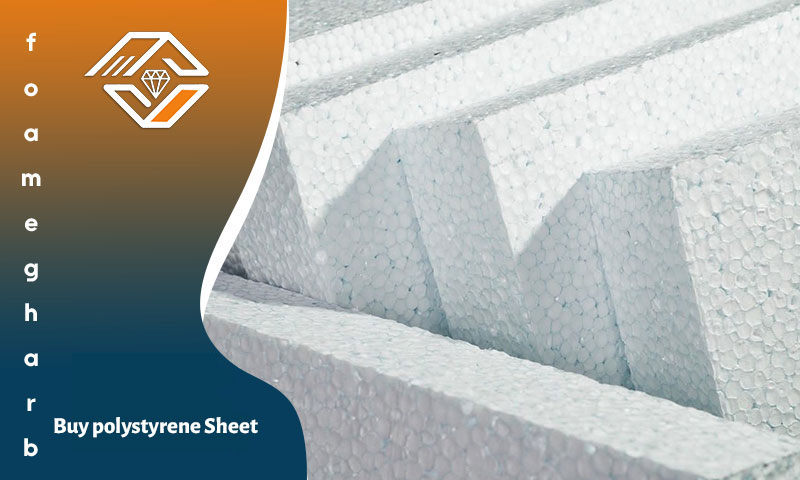
Polystyrene sheets are neutral polymeric materials with a very lightweight structure and a porous appearance, produced from a type of plastic derived from styrene monomer. This material is composed of 95% air and only 5% plastic.
Polystyrene is also known by other names such as EPS (Expanded Polystyrene), unolite, Akasif, and styrofoam. Although the main component of EPS is styrene, in general, based on the type of raw material, it is categorized into four main groups: general-purpose polystyrene, high-impact polystyrene, expanded polystyrene (EPS), and extruded polystyrene (XPS).
| Product Name | Dimensions | Density | Price |
| 2‑cm Styrofoam Sheet | 100*200 | 7-10-15-20-25 | Contact Us |
| 3‑cm Styrofoam Sheet | 100*200 | 7-10-15-20-25 | Contact Us |
| 5‑cm Styrofoam Sheet | 100*200 | 7-10-15-20-25 | Contact Us |
| 10‑cm Styrofoam Sheet | 100*200 | 7-10-15-20-25 | Contact Us |
| 15‑cm Styrofoam Sheet | 100*200 | 7-10-15-20-25 | Contact Us |
| 20‑cm Styrofoam Sheet | 100*200 | 7-10-15-20-25 | Contact Us |
One of the most important and practical materials widely used today across various industries—including construction and packaging—is polystyrene sheet (EPS sheet).
Polystyrene sheets are used in different parts of buildings such as walls, ceilings, and more due to their valuable features, including:
Extremely lightweight
Excellent resistance to impact and pressure
Outstanding sound and moisture resistance
High resistance to chemicals
Resistance to corrosion and insects
In fact, ceiling and wall EPS blocks are produced from the main EPS block and are widely utilized in construction.

The production of polystyrene sheets involves three main stages:
In the first step, known as pre-expansion, the raw material (styrene) is expanded by injecting steam into the expander, increasing its volume to more than 50 times its original size.
In the second stage, during the polymerization process, two blowing agents—pentane and carbon dioxide—are used to expand and foam the raw material. The material is then left to rest for 6 to 12 hours to reach thermal and pressure equilibrium and complete its maturation phase.
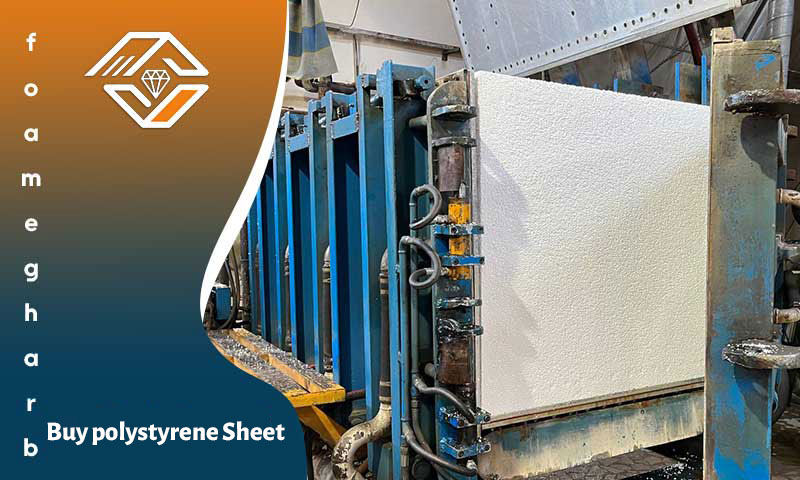
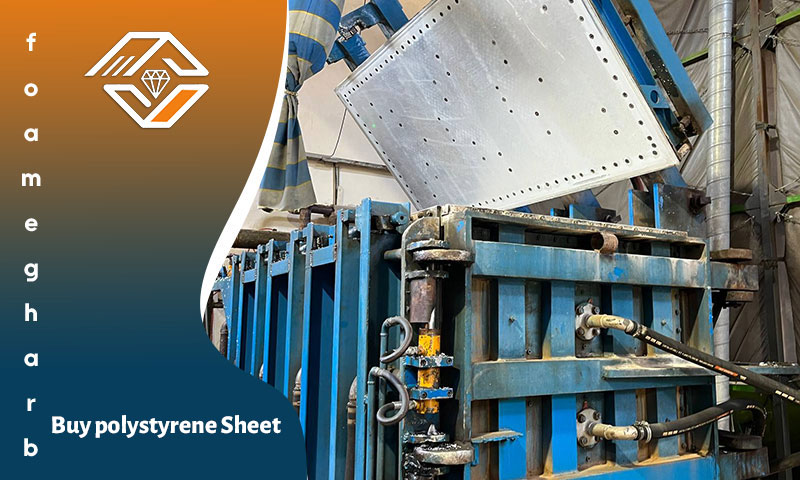
The cooled beads are transferred into molds and reheated with steam, allowing the EPS beads to fuse together and take the form of the main polystyrene block.
During production, the blowing agents pentane and carbon dioxide create millions of air-filled cells within the polystyrene structure. As a result, more than 90% of the final product’s volume is composed of air, while the raw material accounts for less than 10%.
In the next phase, the cooked and expanded material is cooled and transferred to storage silos to prepare it for molding. The material is then poured into the mold and shaped into the main EPS block using steam. These blocks typically measure 1x2x2 meters. Finally, the blocks are moved to well-ventilated storage areas with controlled temperature.
The production of EPS packaging sheets is an efficient and cost-effective method for protecting delicate goods during transportation and storage. These sheets are made from expanded polystyrene (EPS), which offers extremely low weight along with excellent shock-absorption and thermal-insulation properties.
Thanks to their flexibility and easy cutting capability, EPS packaging sheets are widely used in various industries—including electronics, home appliances, and the food industry—and play an essential role in maintaining the safety and integrity of products.
A polystyrene ice box is one of the most important and best-selling products of
You can place an order, exchange information, and receive the latest and most up-to-date prices for standard and custom EPS by contacting the sales department through our Contact Us page.
When buying various EPS products, it is essential to pay special attention to the standard certification. It is also recommended to check the experience of manufacturers in EPS production and prioritize those with a long-standing history in the field to ensure a safe and reliable purchase.
When buying EPS sheets, ceiling EPS, packaging EPS, and other types, several factors must be considered, including resistance to pressure and impact, moisture absorption, fire resistance, density, type of material curing, thickness, and dimensions of the EPS.
Overall, the price of EPS sheets depends on several factors, the most important of which include:
The company and brand manufacturing the EPS
Standard size and dimensions of the EPS sheets
Quality of raw materials
Type of curing and polymerization process
EPS density
Quantity required
Transportation and installation costs
Composition of waste in the foam blocks
EPS sheets, or high-density polystyrene, are widely used in various industries such as packaging, construction, insulation, and decoration. These sheets are ideal for different projects due to their features, including lightweight, thermal and acoustic insulation, moisture resistance, and high flexibility.
Proper Thickness and Dimensions
When buying EPS sheets, pay attention to the thickness and dimensions. Different thicknesses are suitable for different applications, so choose the one that best fits your specific needs.
Quality of Raw Materials
Ensure that the EPS sheets are made from high-quality raw materials. Low-quality polystyrene may reduce the performance and lifespan of the product.
Price and Costs
Always compare prices before purchasing EPS sheets. Prices may vary depending on the quality and thickness of the sheets. Keep in mind that a lower price may indicate lower quality, so choose options that balance your budget and requirements.
Environmentally Friendly Compliance
If you are looking for eco-friendly EPS sheets, look for recyclable products or those that meet environmental standards.
EPS sheets have unique characteristics that make them suitable for use in various industries. The most important features of this material include:
Another service offered by Iranian West Foam is polystyrene molding, which minimizes any limitations in the range of EPS products.
Various companies can place an order for EPS mold production by submitting their product design.
There are many factories and companies with reputable representatives across the country that offer high-quality EPS at reasonable prices. The best option for purchasing EPS sheets is to visit reputable representatives in your city. Most of these companies have standard certifications, ensuring that the EPS they provide meets all necessary production standards.
Iranian West Foam is one of the trusted manufacturers of various EPS and polystyrene sheets in Alborz Province, delivering its products throughout Iran in a short period.
There are several criteria for categorizing EPS sheets, and one of the main factors is the density of the sheet. The higher the density, the greater the compression and compactness of the sheet.
The EPS sheets offered by Iranian West Foam are available in densities ranging from 7 to 30, depending on customer orders. For example, EPS sheet 10 is known as standard, while EPS sheet 20 is referred to as high-density polystyrene. Additionally, both standard and high-density EPS sheets are available in various dimensions and can be customized according to customer requirements.

One of the materials widely used in various construction projects is the 1 cm EPS sheet. Due to its unique properties, this sheet is considered a highly practical building material.
The 1 cm EPS sheet is commonly used in construction and interior decoration, and many of us are familiar with it. With the increasing demand for thermal and acoustic insulation in buildings, EPS has become an economical and efficient solution for many projects.
Thanks to its suitable thickness and insulating properties, the 1cm EPS sheet is recognized as an ideal choice for insulation and acoustic applications in buildings.
Thermal insulation for walls and ceilings of buildings
Filling concrete to save on foam concrete usage
Base layer for underfloor heating systems
Packaging for large and fragile goods
Acoustic insulation for large halls, theaters, music venues, and community centers
Insulation for sub-zero cold storage rooms
The 1 cm EPS sheet is available in 100×200 cm dimensions and can also be cut into smaller sizes. While it may seem that cutting EPS sheets requires specialized tools, in fact, you can easily cut them to the desired size using a standard cutter.
Construction technologies are constantly evolving, and one of these changes involves modifications in the density of standard 2 cm EPS sheets. These sheets are available in different densities ranging from 7 to 25, depending on production and customer requirements.
When a fire occurs, different materials react in different ways. EPS, widely used in the construction industry, also undergoes changes when exposed to high heat, similar to other hydrocarbon-based materials such as wood and paper.
If EPS is exposed to temperatures above 212°F (100°C), it softens, shrinks, and eventually melts. By reading this article, you will become familiar with how EPS behaves in fire conditions.
The 2 cm EPS sheet is one of the most common and popular building materials used in construction. With its superior properties and features, it provides an effective solution for creating durable and insulated structures in buildings.
This article explores the unique applications of the 2 cm EPS sheet, including its thermal and acoustic insulation performance, suitability for heating and cooling systems, resistance to moisture and pests, variety in design and color, and its extensive use in the construction industry and many other sectors.
The 5 cm EPS sheet is one of the most widely used types of EPS, commonly applied in roof and wall construction. In addition to these applications, this EPS is also frequently used for insulation, packaging of large and fragile goods, and more. This type of EPS is produced with high-quality raw materials by the skilled youth of Iran, ensuring excellent quality.
The 5 cm EPS sheet has several features that make it unique, including:
High heat resistance, making it suitable for various temperature conditions
Excellent insulation properties, ideal for thermal and acoustic applications
Lightweight, allowing for easy handling and transportation
High resistance to cold and wind, enhancing durability in different environments
Another type of EPS sheet is the 10 cm EPS sheet, which has a wide range of applications. This sheet is produced and offered in various sizes and densities to meet different project requirements.
The unique features and properties of EPS sheets have made this material highly versatile, with numerous industrial applications, gaining significant attention in recent decades. Some of the most important applications of EPS sheets include:
Expanded polystyrene (EPS) is well-known as an excellent thermal insulator, effectively preventing the transfer of heat and cold. For this reason, the use of EPS in the construction industry continues to grow.
However, using EPS alone as sound insulation is not recommended. If EPS is intended for acoustic insulation, in addition to selecting the proper thickness and density, it should be used in combination with open-cell insulation materials (such as polyurethane foam or rock wool) to achieve optimal soundproofing results.
EPS is also an excellent temperature insulator, making it ideal for use in industrial refrigerators and cold storage facilities. Typically, high-density EPS sheets with a thickness of 5 to 10 cm are installed beneath the walls of industrial refrigerators. This not only prevents cold from escaping through the refrigerator walls but also minimizes the impact of external temperatures on the internal environment. For effective thermal insulation in industrial refrigerators, it is strongly recommended to use high-density EPS, as its compact structure enhances the insulation performance.
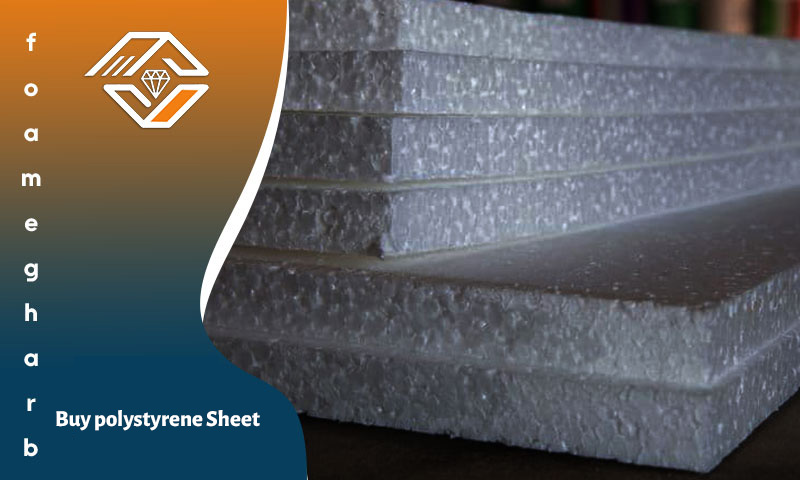
In addition to being widely used as an insulating material in the construction industry, EPS is extremely lightweight. This property makes it highly popular in building construction. As a result, EPS is often used as 3D panels in walls and ceiling blocks in building projects.
However, it is important to ensure that fire-resistant and standard-compliant EPS is used for these applications. Additionally, construction regulations and the recommendations of supervising engineers should be carefully followed when incorporating these products into building structures.
Since EPS is a lightweight material, it is widely used for packaging purposes. EPS is commonly employed to protect fragile and sensitive items such as ceramics, glassware, electronic components, automotive parts, and more.
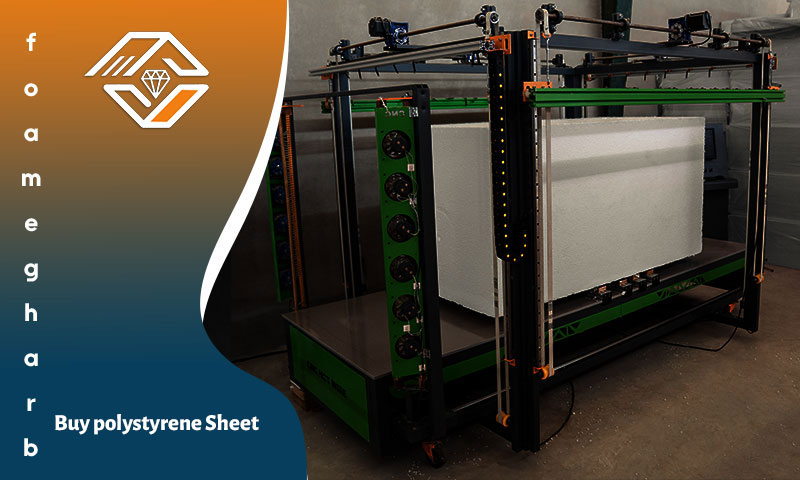
Although industrial EPS is often cut using hot-wire methods, it can also be easily shaped with simple cutting tools such as cutters, coping saws, and similar instruments. Additionally, high-density EPS has good sanding properties, making it easy to smooth and shape.
These features, combined with its affordable cost, have made EPS a popular material for decorating television programs, movies, and theater sets, attracting many set designers and decorators to use it in their creative projects.
One of the notable features of EPS is its easy cuttability, which makes it ideal not only for decor and model making but also for craft projects for children in schools. Some textbooks even reference EPS for craft workshops and creative activities.
Typically, 2 cm, 3 cm, and 5 cm high-density EPS sheets are used for crafting purposes. However, when working with EPS, it is important to note that the material is sensitive to many types of glue. To attach EPS pieces, it is recommended to use special EPS glue or wood glue.

